

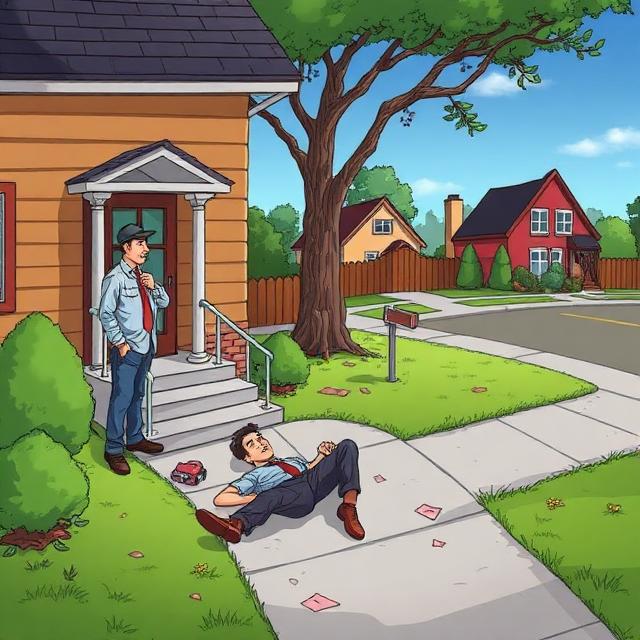
Landowner Liability for Injuries Occurring off Premises
“Although a landowner is most commonly liable for injuries that occur on the property, there are occasions when a landowner may be liable for a dangerous condition that results in injury off the premises.” Johnson v. Howard Mark Prods., Inc., 608 So. 2d 937, 938–39 (Fla. 2d DCA 1992) (citations omitted).
“A landowner’s conduct can give rise to a zone of risk extending beyond the physical boundaries of his property when harm reaching outside those boundaries is foreseeable.” Almarante v. Art Inst. of Fort Lauderdale, Inc., 921 So. 2d 703, 705 (Fla. 4th DCA 2006) (citation omitted).
“In other words, the general standard of care which the common law places on all landowners to protect invitees under a wide spectrum of circumstances can authorize a case-specific standard of care requiring protection of invitees on nearby property if the landowner’s foreseeable zone of risk extends beyond the boundaries of its property.” Johnson, 608 So. 2d at 938–39.
In Johnson, the defendant operated a nightclub that did not provide adequate parking for its customers. Johnson, 608 So. 2d at 938. As a result, the customers often parked on the opposite side of an adjacent, unlit highway that required the customers to walk across the highway in the dark. Id. The owner of the nightclub did not own, possess, or control this property. Id.
One evening the decedent was struck and killed by an automobile while attempting to cross the highway to patronize the nightclub. Johnson, 608 So. 2d at 938. The decedent’s estate alleged that the defendant knew or should have known that the inadequate parking was a dangerous condition. Id. The Court reversed a summary judgment entered in favor of the defendant finding that a reasonably foreseeable zone of risk may have been created because the defendant did not provide adequate parking for its customers. Id.
In Poe v. IMC Phosphates MP, Inc., 885 So. 2d 397 (Fla. 2d DCA 2004), the Court addressed two additional theories on which the Plaintiffs can establish a premises liability claim. Under the first theory, “a traveler who enters private land that appears to be a continuation of the public highway becomes an implied invitee.” Id. at 401. “Under such circumstances, the owner of the land may be held liable for injuries sustained by the traveler resulting from the property owner’s failure to exercise due care to keep the property in a reasonably safe condition for travel.” Id.
In this circumstance, the cause of the plaintiff’s entry onto the property determines his status either as an invitee or as an uninvited licensee or a trespasser and, therefore, the extent of the landowner’s responsibility. Poe, 885 So. 2d at 402. “This question involves issues of material fact not subject to determination on summary judgment.” Id. Further, “[t]he status of the person on the premises of another is generally a question of fact.” Id. (quotation omitted). Assuming the plaintiff was an implied invitee on the landowner’s property, “additional questions of fact arise concerning whether [the landowner] kept its property in a reasonably safe condition for travel.” Id.
The second additional theory, as noted by the Court in Poe, is found in the Second Restatement of Torts. Poe, 885 So. 2d at 404.
A possessor of land who creates or permits to remain thereon an excavation or other artificial condition so near an existing highway that he realizes or should realize that it involves an unreasonable risk to others accidentally brought into contact with such condition while traveling with reasonable care upon the highway, is subject to liability for physical harm thereby caused to persons who (a) are traveling on the highway, or (b) foreseeably deviate from it in the ordinary course of travel.
Id. (quoting Restatement (Second) of Torts § 368).
“In cases where section 368 applies, there are generally questions of fact concerning: (1) whether the . . . artificial condition on the property in fact involved an unreasonable risk of harm to others; (2) whether the owner realized or should have realized that an . . . artificial condition on his property involved an unreasonable risk to others; (3) whether the person or persons sustaining injury were traveling with reasonable care upon the highway; and (4) whether it was foreseeable that the person or persons injured might deviate from the highway in the ordinary course of travel and come into contact with the . . . artificial condition.” Id. The Poe Court found that these are “questions of fact to be decided by a jury.” Id.