

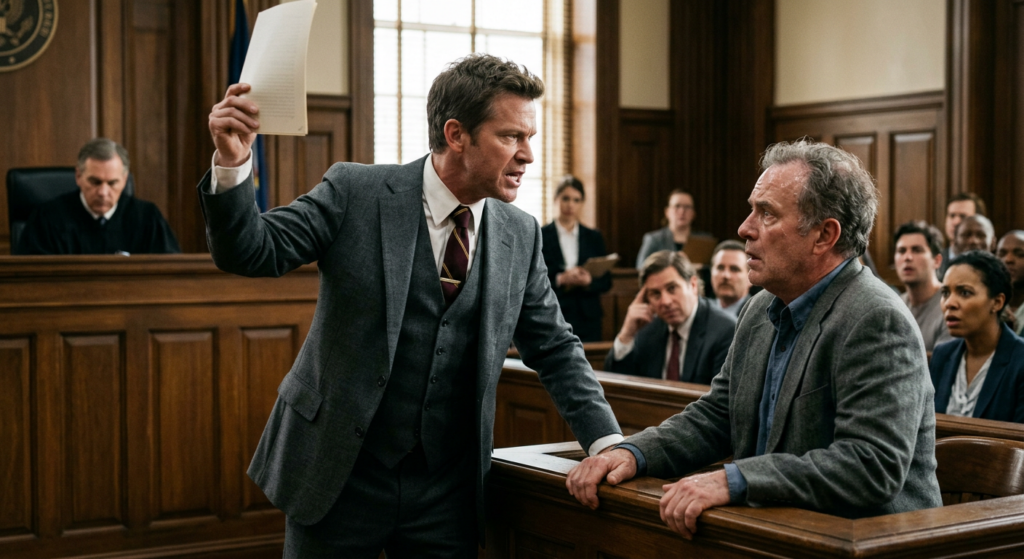
Cross-Examination
“Cross-examination is the principal means by which the believability of a witness and the truth of his testimony are tested.” Elmer v. State, 114 So. 3d 198, 202 (Fla. 5th DCA 2012) (quotation omitted). “[T]he object of cross-examination is to weaken or disprove the case of one’s adversary.” Louette v. State, 12 So. 2d 168, 174 (Fla. 1943). See also Morrison v. State, 818 So. 2d 432, 446–47 (Fla. 2002) (quotation omitted) (“[P]urpose of cross examination is to elicit testimony favorable to the cross-examining party … and to challenge the witness’s credibility when appropriate”); Eberhardt v. State, 550 So. 2d 102, 105 (Fla. 1st DCA 1989) (citation omitted) (purpose of cross-examination is to “test, weaken, or demonstrate impossibility of testimony” of witness on direct examination and to impeach credibility).
The right to cross-examination is found in the Confrontation Clause of the Sixth Amendment to the United States Constitution, applicable to the states through the 14th Amendment, which provides that in all criminal prosecutions, the accused shall enjoy the right, among others, to be confronted with the witnesses against him. U.S. Const. Amend. VI; Kelly v. State, 425 So. 2d 81, 83 (Fla. 2d DCA 1982). In addition, the Florida Constitution contains a confrontation clause affording the accused the right to confront adverse witnesses at trial. Fla. Const. Art. I, § 16(a).
The Florida Supreme Court has referred to cross-examination as a “crucible” that is “well-suited for gleaning meritorious from non-meritorious claims.” Eppler v. Tarmac America, Inc., 752 So. 2d 592, 595–96 (Fla. 2000). “It is well established that the cross-examination of a witness is one of the safeguards to accuracy and truthfulness.” Burns v. Freund, 49 So. 2d 592, 595 (Fla. 1950). “When a witness has been examined in chief, the other party has a right to cross-examine for the purpose of ascertaining the truth of matters about which the witness testified.” Id.
“For purposes of discrediting a witness, a wide range of cross-examination is permitted as this is the traditional and constitutionally guaranteed method of exposing possible biases, prejudices and ulterior motives of a witness as they may relate to the issue or personalities in the case at hand.” Strickland v. State, 498 So. 2d 1350, 1352 (Fla. 1st DCA 1986). “The scope of cross-examination, among many other things, is the interest of the witness in the litigation, his motives, his inclinations, prejudices, his means of obtaining a correct and certain knowledge of the facts about which he has borne testimony, his power of discernment, memory and description.” Burns, 49 So. 2d at 595. “The purpose of the cross-examination is to test the truth of witness, to sift, modify, or explain what has been said, to develop new or old facts in a view favorable to the cross-examiner, or even to discredit the witness.” Id.
However, just because you can do something does not always mean you should do it. “An attorney is not required to cross-examine a witness.” 1 Florida Civil Trial Practice § 11.4. “The lawyer should not cross-examine a witness without definite objectives in mind. The attorney should never cross-examine a witness unless the witness has done some particular harm in direct examination or has intentionally held back pertinent information.” Id. “A common rule of thumb for the cross-examiner is to almost never ask a question without knowing the answer in advance.” 1 Florida Civil Trial Practice § 11.3. “A cross-examining lawyer should always stop while ahead and sit down after reaching a high note.” 1 Florida Civil Trial Practice § 11.4.
An example of when counsel should have ended cross-examination before asking that “one question too many” is found in State Farm Mutual Auto. Ins. Co. v. Gage, 611 So.2d 39 (Fla. 4th DCA 1993). Plaintiff’s counsel insisted on asking the defense’s medical expert in a personal injury case how the physician could account for the difference in the disability rating that he had given to the plaintiff and the rating given by the plaintiff’s expert. Id. at 40. The physician responded: “If you really want me to get into it, I’ll get into it. We know Dr. Kishner is a plaintiff’s doctor. He finds positive EMG’s in every patient he sees. If you want an opinion, I’ll give it to you.” Id.
The scope and extent of cross-examination rest within the sound discretion of the trial court. Welch v. State, 342 So. 2d 1070 (Fla. 3d DCA 1977). A trial judge’s discretion includes imposing reasonable limits on cross-examination based on concerns about “harassment, prejudice, confusion of the issues, the witness’ safety, or interrogation that is repetitive or only marginally relevant.” Delaware v. Van Arsdall, 475 U.S. 673, 679 (1986). “The right of full cross-examination is absolute and the denial of that right may easily constitute reversible error.” Petruschke v. State, 125 So. 3d 274, 283 (Fla. 4th DCA 2013). On appeal, a trial court’s limitations on cross-examination of a witness are reviewed for abuse of discretion. Patrick v. State, 104 So. 3d 1046, 1057 (Fla. 2012).